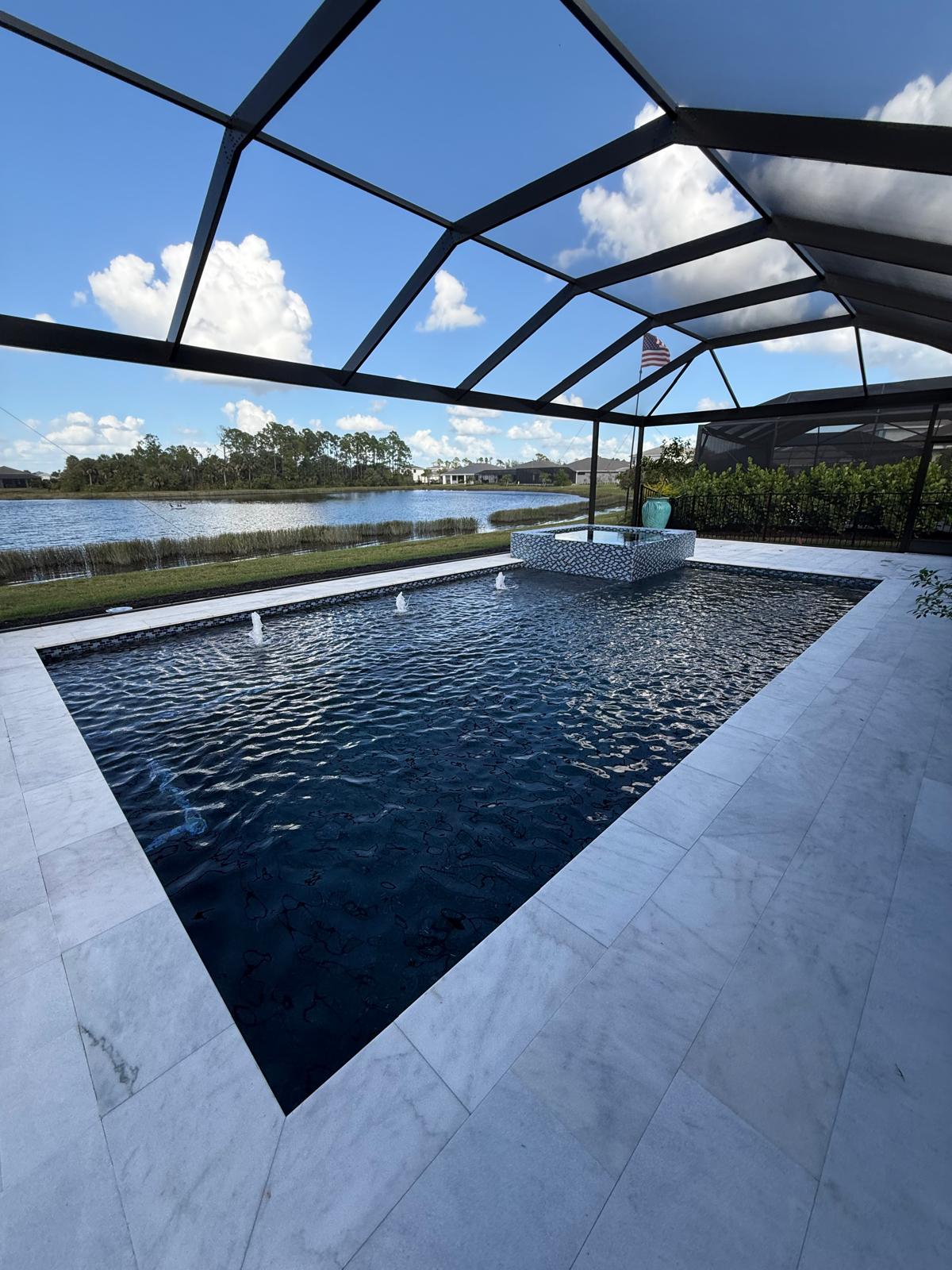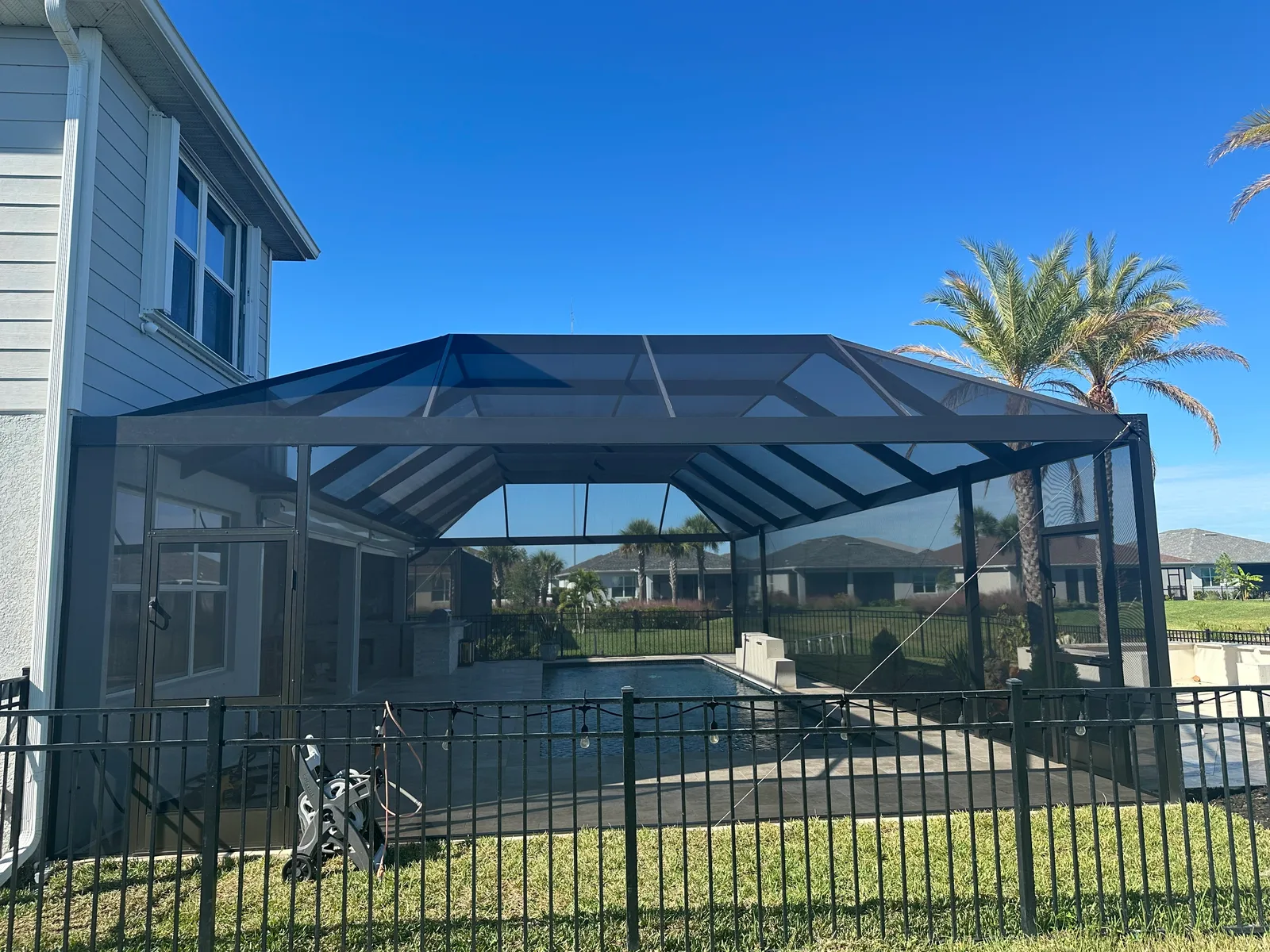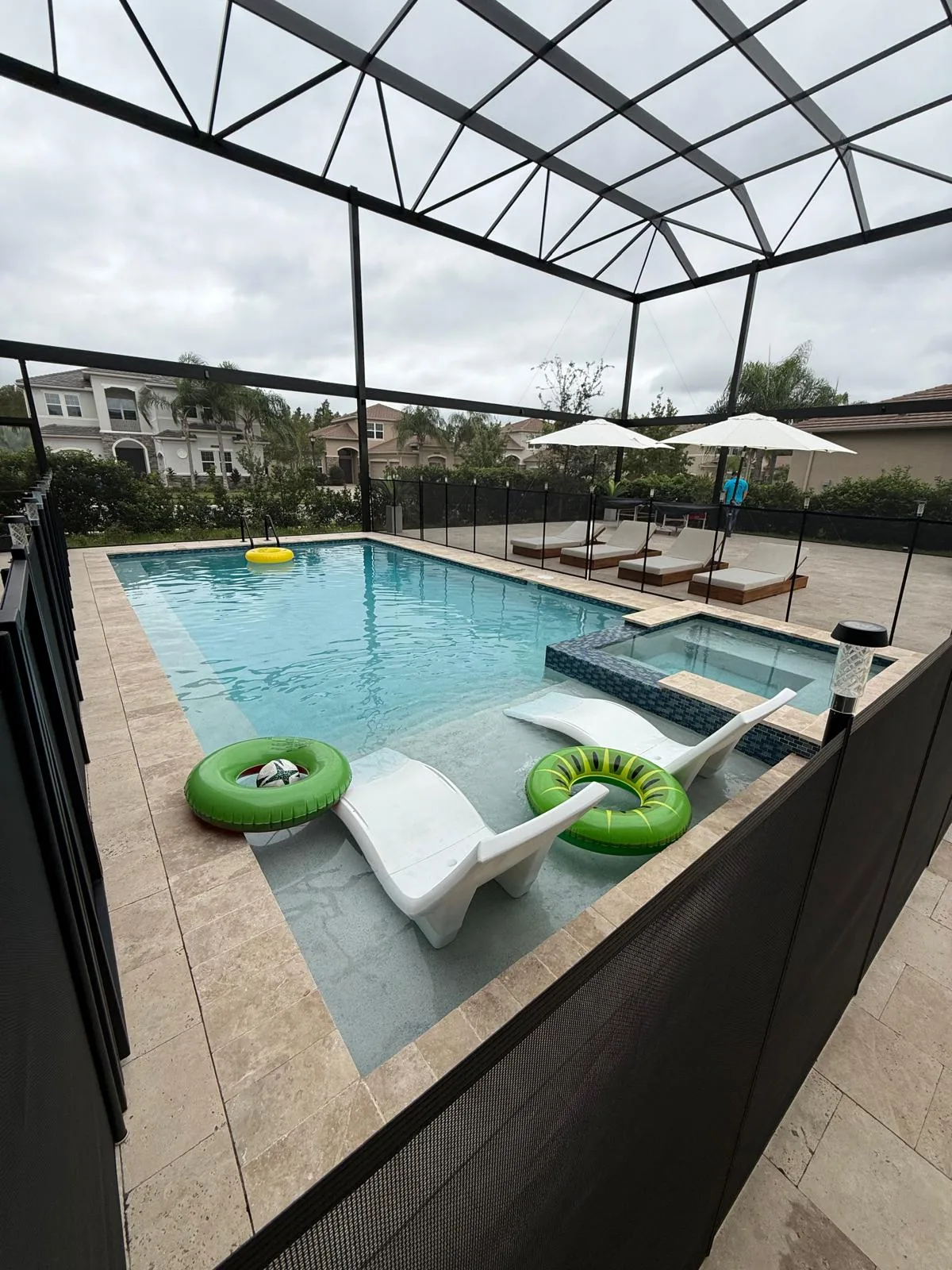
If you own a screened enclosure in Southwest Florida, you already know what the rainy season can do. Water sheets off the roof, pools along the base of your structure, and over time it starts eating away at everything it touches. The concrete stains. The aluminum corrodes. The landscaping around your enclosure erodes into muddy trenches. And the standing water becomes a breeding ground for mosquitoes that make your outdoor space unusable.
The fix is not complicated, but it is one of the most overlooked upgrades homeowners make when building or maintaining an enclosure. Gutters designed specifically for pool cages, lanais, and covered patios solve the water management problem at its source, directing rainwater away from your structure before it ever has a chance to cause damage.
At The Yasma Screen, gutter installation is one of the most requested add-on services we provide across Cape Coral, Fort Myers, Naples, and the rest of Southwest Florida. Here is everything you need to know about why gutters matter for enclosures, what options are available, and how to keep them performing at their best.
Why Enclosures Need Dedicated Gutter Systems
Most homeowners think of gutters as something that belongs on the main house. And they are right, but the same logic applies to any roofed outdoor structure. Pool cages, lanais, and covered patios all have roof panels that collect rainwater. Without a gutter system, that water cascades off the edges in uncontrolled sheets.
Water Damage to the Foundation and Slab
When water repeatedly hits the same areas around your enclosure, it erodes the soil and compromises the base. For pool cages mounted on a concrete deck, this means water seeps under the slab, weakens the substrate, and can eventually cause cracking or settling. Repairing a pool deck slab is exponentially more expensive than installing gutters to prevent the problem in the first place.
Aluminum Corrosion and Staining
Pool cage frames and lanai structures in this region are built from aluminum for good reason. Aluminum resists rust far better than steel. But it is not immune to corrosion, especially when standing water sits against it day after day. Mineral deposits from hard water leave white chalky stains on the frame. Acidic rainwater accelerates oxidation at the joints. Over a few years, what started as a cosmetic issue becomes a structural one.
Landscape Erosion
Without gutters, water pouring off the enclosure roof digs channels into the soil around the perimeter. Garden beds wash out. Mulch floats away after every storm. Pavers along the edge shift and settle unevenly. If you have invested in professional landscaping around your pool area or lanai, uncontrolled runoff is actively destroying that investment every time it rains.
Mosquito and Pest Problems
Standing water is the number one attractant for mosquitoes in Florida. Puddles that form around enclosure bases after a rainstorm can take days to evaporate in the humid Southwest Florida climate. That is more than enough time for mosquitoes to breed. Proper gutter systems with downspouts that direct water away from the structure eliminate these standing water zones entirely.
Aluminum Seamless Gutters: The Best Option for Enclosures
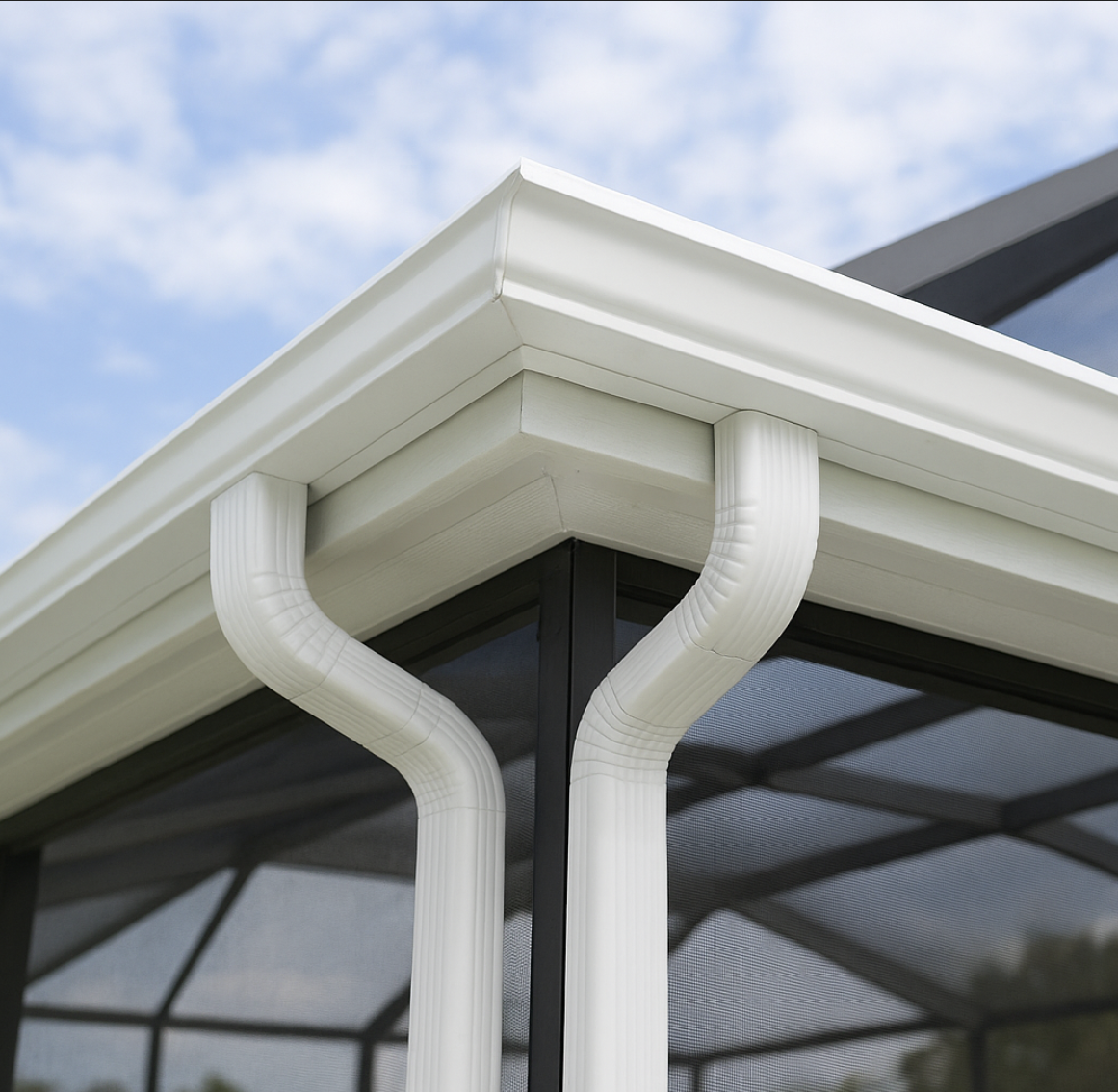
Not all gutters are created equal, and the type of gutter that works on a traditional home roof is not always the best fit for an enclosure. At The Yasma Screen, we install aluminum seamless gutters specifically engineered for pool cages and lanai applications.
What Makes Seamless Gutters Different
Traditional sectional gutters are assembled from pre-cut pieces joined together with seams. Those seams are the weak points. They leak. They collect debris. They corrode faster than the rest of the gutter. Seamless gutters are formed from a single continuous piece of aluminum, custom cut to the exact dimensions of your enclosure on site. No seams means no leak points, no debris traps, and a much cleaner appearance.
Why Aluminum Is the Right Material for Florida
Aluminum is lightweight, corrosion-resistant, and holds up exceptionally well in the salt air and humidity that define the Southwest Florida climate. It does not rust like steel. It does not crack or become brittle like vinyl. And it can be finished in a variety of colors to match your existing enclosure frame, making the gutter system virtually invisible from the outside.
Aluminum gutters also handle the thermal expansion that comes with Florida's extreme temperature swings. During the summer, surface temperatures on a pool cage roof can exceed 150 degrees. At night, they drop rapidly. Materials that cannot flex with these changes crack and pull away from the mounting points. Aluminum handles this cycle without issue.
Custom Sizing for Enclosures
Enclosure gutters are not a one-size-fits-all product. Pool cages come in a wide range of shapes and sizes, from small rectangular enclosures over a spa to massive multi-level structures covering an entire backyard. The gutter system needs to be sized to handle the volume of water that the specific roof area collects. Undersized gutters overflow during heavy rain, which defeats the purpose. Oversized gutters look bulky and add unnecessary weight to the structure.
Our team measures the roof area of your enclosure, calculates the expected water volume based on local rainfall data, and fabricates gutters on site that are matched to your exact specifications.
Water Drainage for Pool Cages and Lanais
Installing gutters is only half the equation. Where the water goes after it enters the gutter system is equally important. A gutter that dumps water right next to the pool cage base is barely better than no gutter at all.
Downspout Placement and Routing
Downspouts need to be positioned at the natural low points of the gutter run, which are determined by the slope of the enclosure roof. From there, they route water to designated drainage areas away from the structure. In many cases, we connect downspouts to underground drainage lines that carry water to the street, a swale, or a dry well elsewhere on the property.
Integration with Existing Drainage
Many homes in Cape Coral and Fort Myers already have French drains, swales, or other drainage systems installed. When we add gutters to an enclosure, we connect them into the existing drainage infrastructure whenever possible. This creates a unified water management system for the entire property rather than isolated solutions that may conflict with each other.
Handling Heavy Florida Rainstorms
Southwest Florida receives an average of 55 inches of rain per year, with the vast majority falling between June and September. During peak rainy season, afternoon thunderstorms can dump two or more inches of rain in under an hour. The gutter system needs to be designed for these peak flow events, not just average conditions. Our installations use appropriately sized gutters and multiple downspout locations to handle even the most intense Florida storms without overflowing.
Gutter Installation: What to Expect
If you have never had gutters installed on an enclosure before, the process is straightforward and minimally disruptive.
Site Assessment
We start with an on-site evaluation of your enclosure. This includes measuring the roof dimensions, assessing the structural attachment points, evaluating the existing drainage on your property, and identifying the optimal downspout locations. We also look at the condition of the enclosure frame itself to make sure it can support the added weight of the gutter system and water load during a storm.
Custom Fabrication
Seamless gutters are formed on site using a portable gutter machine. A flat coil of aluminum is fed through the machine, which bends it into the gutter profile. The result is a single continuous piece with no joints or seams. This on-site fabrication process means every gutter is made to the exact length needed, eliminating waste and ensuring a perfect fit.
Professional Mounting
The gutters are attached to the enclosure frame using brackets and hangers designed for aluminum structures. Proper mounting is critical. The gutters need to be pitched correctly to ensure water flows toward the downspouts rather than pooling in the gutter itself. Incorrect pitch is one of the most common problems with DIY gutter installations and leads to standing water, debris buildup, and eventual sagging.
Downspout Connection
Once the gutters are in place, downspouts are installed and connected to the drainage system. We test the entire system with water to verify proper flow before completing the installation.
Gutter Maintenance: Keeping Your System Working
Gutters are low-maintenance, but they are not no-maintenance. A few simple steps keep your enclosure gutter system performing at peak efficiency for decades.
Regular Cleaning
Even with screens, gutters accumulate debris over time. Leaves, pollen, seed pods from nearby trees, and dirt carried by wind all find their way into the gutter channel. We recommend cleaning your enclosure gutters at least twice a year, once before the rainy season begins in late May and once after it ends in October. If you have overhanging trees, quarterly cleaning is a better schedule.
Inspecting for Damage
After major storms, take a walk around your enclosure and look at the gutters. Check for sections that may have pulled away from the frame, dents from fallen branches, or blockages at the downspout openings. Catching small problems early prevents them from becoming expensive repairs.
Checking Downspout Flow
During a rainstorm, step outside and watch your downspouts. Water should be flowing freely from each one. If a downspout is barely trickling while the gutter above it is full, there is a blockage that needs to be cleared. A garden hose can often flush out minor clogs, but stubborn blockages may require professional attention.
Gutter Guard Options
For homeowners who want to minimize cleaning frequency, gutter guards are an option worth considering. These are covers or screens that sit over the gutter opening and prevent large debris from entering while still allowing water to flow through. They do not eliminate the need for maintenance entirely, but they can reduce cleaning from multiple times per year to once per year in most cases.
Frequently Asked Questions About Gutters for Enclosures
Do all pool cages need gutters?
Not every pool cage requires gutters, but most benefit significantly from them. If you notice water staining on your pool deck, erosion around the enclosure base, or standing water after rainstorms, gutters will solve those problems. Enclosures with solid roof panels rather than screen-only roofs collect the most water and benefit the most from gutter installation.
How long do aluminum seamless gutters last?
Aluminum seamless gutters typically last 20 to 30 years or more with proper maintenance. In the Southwest Florida climate, the biggest factors affecting lifespan are salt air exposure and physical damage from storms. Regular cleaning and occasional inspections help maximize the life of the system.
Can gutters be added to an existing enclosure?
Yes. Gutters can be retrofit onto virtually any existing pool cage, lanai, or patio enclosure. The installation does not require modifying the enclosure structure. Brackets are attached to the existing frame, and the gutters are mounted directly to them.
Will gutters make my enclosure look bulky?
Aluminum seamless gutters have a slim, low-profile design that blends with the enclosure frame. When color-matched to the existing aluminum, they are nearly invisible from ground level. Most homeowners are surprised at how unobtrusive the finished installation looks.
How much do enclosure gutters cost?
Cost varies depending on the size of the enclosure, the number of downspouts required, and whether underground drainage lines are needed. We provide free on-site estimates so you get an accurate price based on your specific situation rather than a generic range that may not apply.
Do gutters help with pool water contamination?
Absolutely. Without gutters, rainwater washing off the enclosure roof carries dirt, pollen, bird droppings, and other debris directly into the pool or onto the surrounding deck. Gutters capture that contaminated runoff and redirect it away from the pool area, reducing the load on your pool filtration system and keeping your water cleaner.
How often should enclosure gutters be cleaned?
Twice a year is the minimum recommendation for most properties in Southwest Florida. If your enclosure is near trees that drop leaves, seeds, or flowers, quarterly cleaning will keep the system flowing freely. Pre-season cleaning in May before the summer rains arrive is especially important.
Can I install gutters on my enclosure myself?
While small gutter projects are within the skill range of experienced DIY homeowners, enclosure gutters present unique challenges. The aluminum frame requires specific mounting hardware, the pitch must be precise for proper drainage, and seamless gutters require professional fabrication equipment. Improper installation can damage the enclosure frame and void manufacturer warranties.
Ready to Upgrade Your Outdoor Surfaces?
The Yasma Screen designs and installs modern, durable paver surfaces for pool decks, driveways, patios, and lanais across Cape Coral, Fort Myers, Naples, and all of Southwest Florida. Request your free estimate today.