There's a reason rectangular pools paired with raised spas have become the gold standard for new Florida homes. The clean geometry, the symmetry, the way the water mirrors the architecture of the house behind it are all part of a backyard that looks like it belongs on the cover of a design magazine. But the moment you wrap that pool with a screen enclosure, every line, every upright, and every roof angle either elevates the design or quietly ruins it.
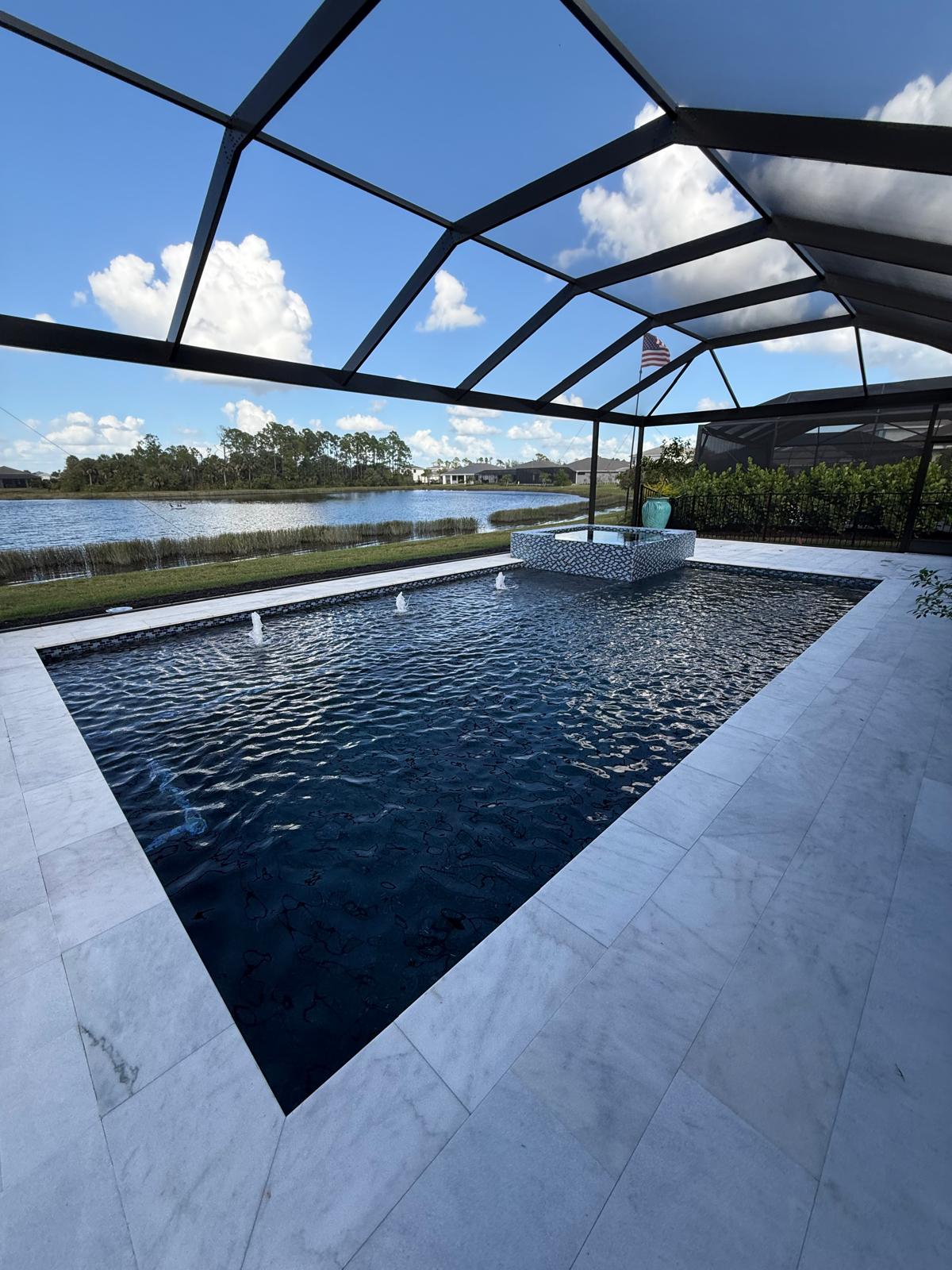
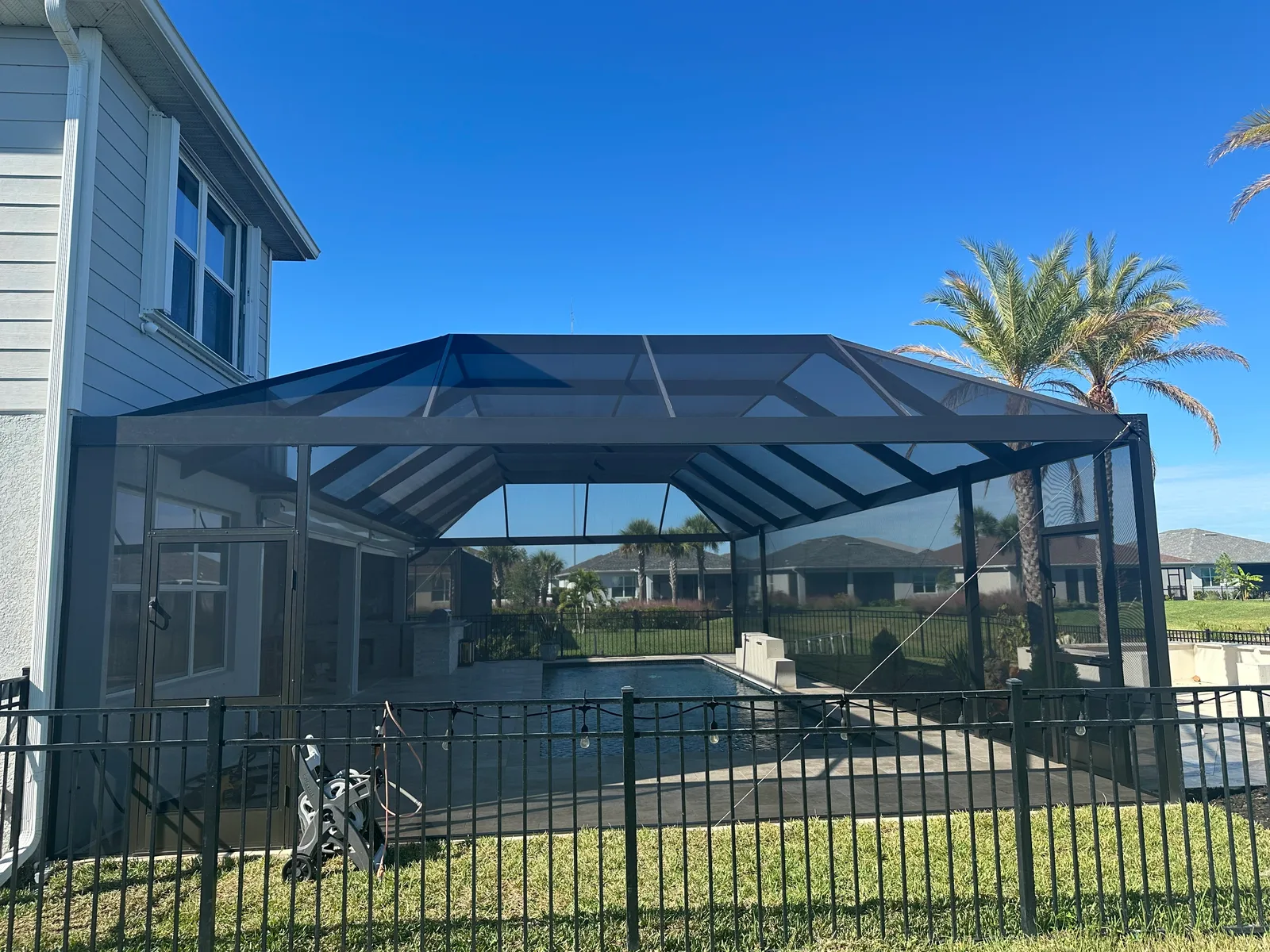
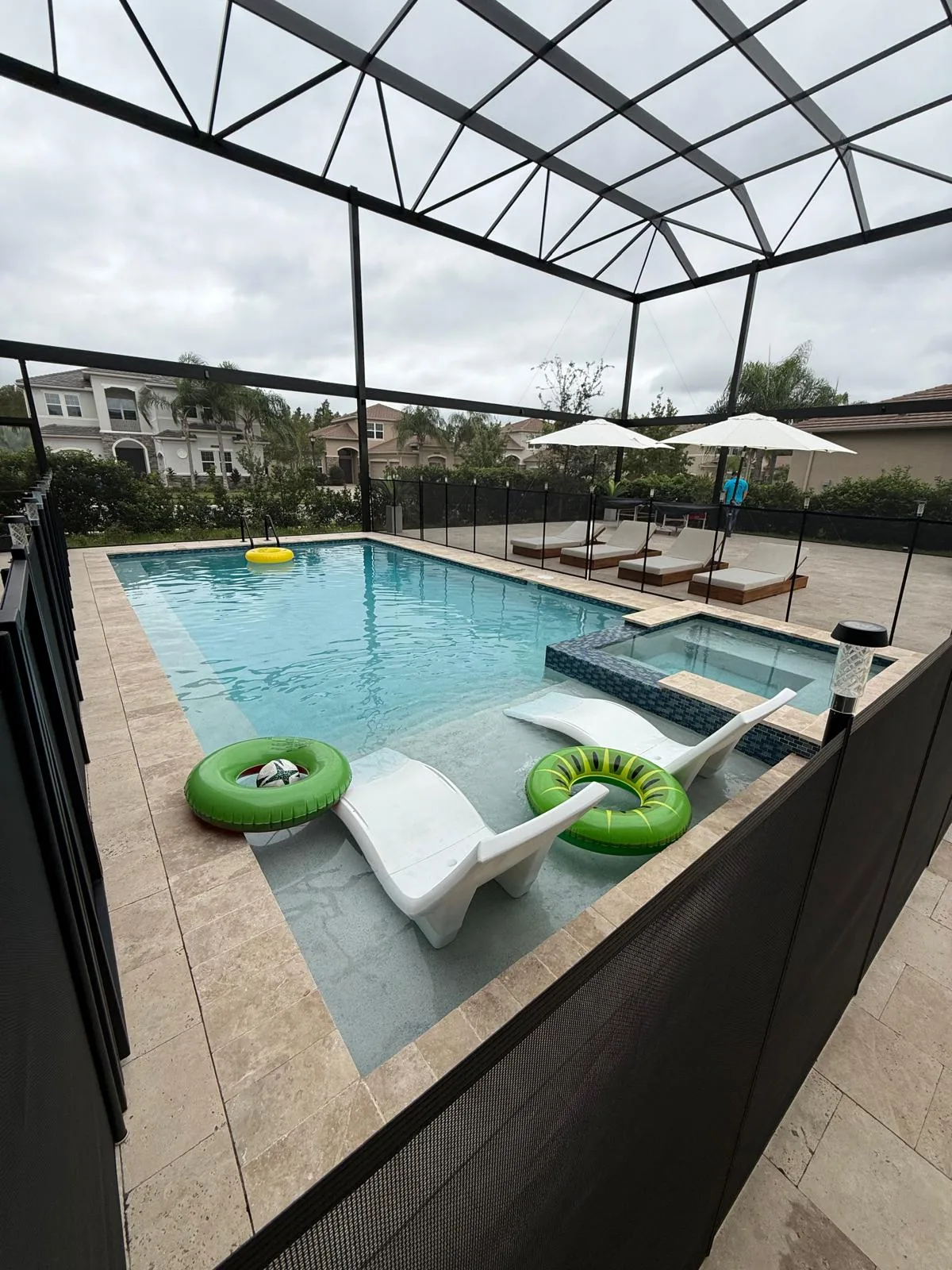
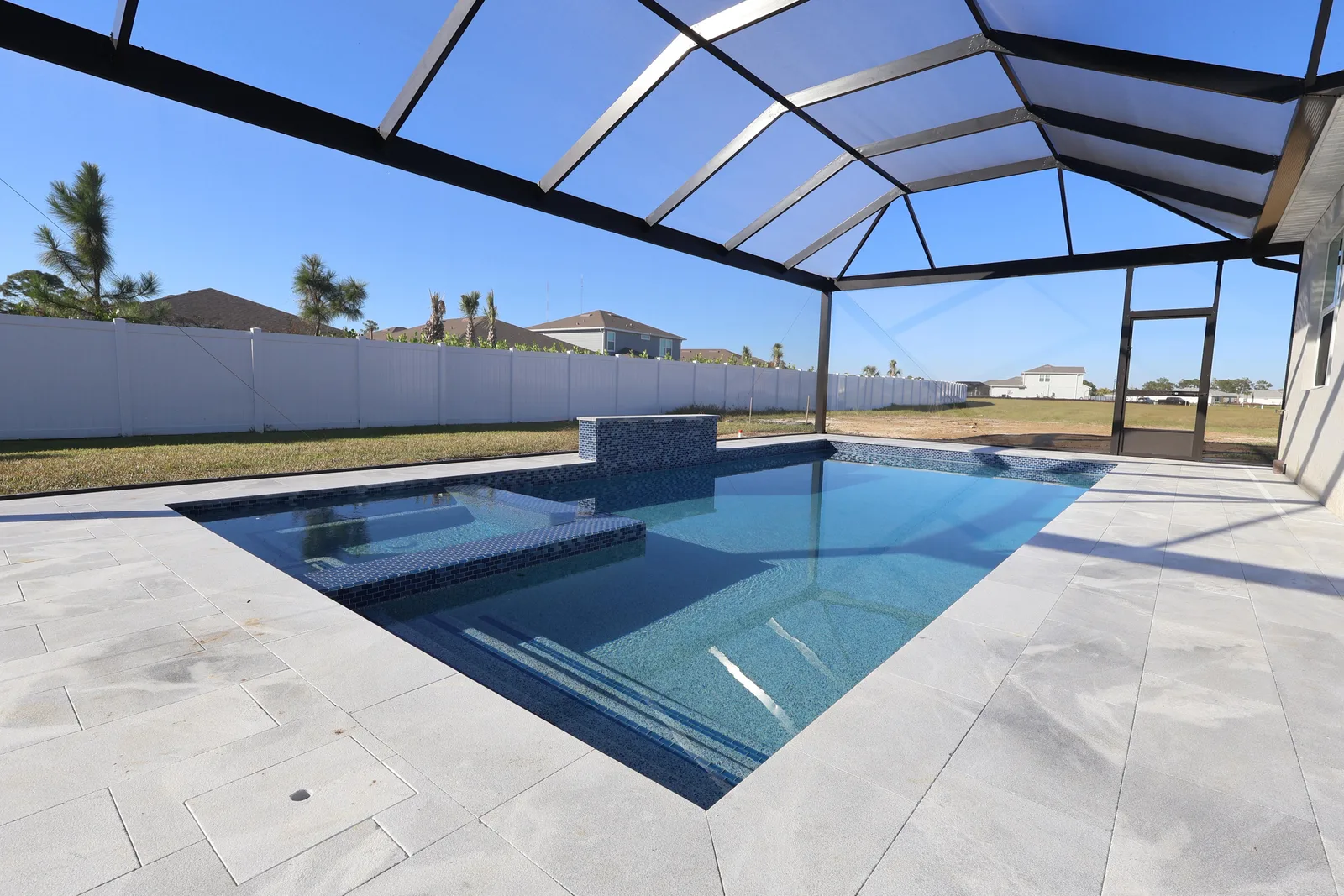
At The Yasma Screen, we build a lot of pool cages around rectangular pool and spa combinations across Cape Coral, Fort Myers, Naples, and the rest of Southwest Florida. The brand new aluminum cage shown here, enclosing a rectangular pool with attached spa over a travertine paver deck, is a great example of how the right enclosure choices make a beautiful pool look even better. Here's how we approach the design and why these details matter.
Why Rectangular Pool and Spa Combos Demand Better Cage Design
Freeform pools forgive a lot of mistakes. Their organic shapes hide misaligned uprights, off-center beams, and awkward roof transitions. Rectangular pools do not. Their straight lines and right angles expose every flaw, which means the cage above them has to be planned with the same precision as the pool itself.
When you add a spa, the challenge multiplies. The spa typically sits raised above the pool deck with its own coping, spillway, and tile work. The cage needs to clear it cleanly without crowding the spa or breaking the visual flow into the pool. Done right, the cage seems to disappear into the architecture. Done wrong, you end up with mismatched bay widths, an upright that lands awkwardly between the pool and spa, or a roof line that fights the rectangle below.
Travertine Decks Raise the Bar Even Higher
Travertine pavers are one of the most popular deck materials in Southwest Florida, and for good reason. They stay cool underfoot, they offer natural slip resistance, and they age beautifully. They also reflect the elegance of the home itself, often picking up tones from the stucco, tile roof, or natural stone elsewhere on the property.
That elegance changes the cage equation. A bargain enclosure with chunky uprights, mismatched hardware, or a clunky color choice will look obviously cheap sitting on top of premium pavers. The cage has to live up to the deck. That usually means a darker bronze or charcoal frame to complement warm travertine tones, slimmer profile uprights where engineering allows, and clean transitions where the cage meets the deck and home.
Key Design Decisions for a Rectangular Pool and Spa Cage
A well-designed enclosure for this type of pool comes down to a handful of decisions that get made before a single piece of aluminum is cut.
Roof Style
Mansard roofs remain the most common choice in Southwest Florida because they offer good headroom across the deck while staying compliant with most HOA height restrictions. Gable and hip roofs can add architectural interest on larger homes, but they cost more and require careful attention to wind load engineering. For a clean rectangular pool, a properly proportioned mansard often delivers the best balance of style and practicality.
Bay Spacing
The spacing between vertical uprights changes the entire look of the cage. Wider bays look more open and modern but require beefier hardware to handle wind loads. Narrower bays are more conservative but can make a cage feel busy. For a rectangular pool with a spa, we usually plan bay spacing so that uprights line up symmetrically with the corners of the pool and the edges of the spa rather than landing randomly along the deck.
Picture Window Panels
Picture windows are tall, frameless screen panels that eliminate horizontal cross members for a much cleaner sightline through the cage. On a rectangular pool with a beautiful backyard view or canal beyond, picture windows transform the experience. They cost more and require thicker uprights to compensate for the missing cross-bracing, but the visual upgrade is significant.
Color and Finish
White, bronze, and charcoal are the dominant frame colors in Florida. White brightens a space and can make a cage feel less imposing, but it shows pollen and water spots quickly. Bronze and charcoal recede visually, allowing the eye to focus on the pool and home behind the screen. With a warm travertine deck, a darker finish almost always reads more sophisticated.
Door Placement
Every cage needs at least one door, and Florida code requires a self-closing, self-latching gate for pool safety. Door placement matters more than people realize. A door that opens directly onto a walkway or near a spa creates traffic problems. A door tucked into a corner with a clean concrete pad outside is barely noticed. We plan door locations during the design phase, not as an afterthought.
Super Gutter Integration
A super gutter built into the cage roof manages rainwater that would otherwise pour off the screen onto the deck or into the pool. It also doubles as a structural beam, adding rigidity to the entire cage. On premium installations, integrating a super gutter is non-negotiable.
Engineering Considerations You Can't See
The most important parts of a quality pool cage are usually the parts homeowners never notice. These are the engineering decisions that determine whether the cage survives a hurricane and whether it looks the same in 20 years as it does on day one.
Wind Load Compliance
Florida building codes require pool cages to meet specific wind load requirements that vary by county. In coastal Southwest Florida, that often means engineering for sustained winds of 150 to 170 mph. Reaching those numbers takes properly sized uprights, reinforced corner connections, and code-compliant anchoring into the home and deck.
Anchoring Into the Travertine Deck
Travertine looks beautiful, but it's not a substrate you can just bolt into. Quality installers core through the pavers into the structural concrete below, then seal the connection so water can't migrate down and undermine the anchor. Cutting corners here is how cages end up loose, leaning, or worse after a major storm.
Stainless Hardware Throughout
Southwest Florida's salt-laden air is brutal on metal. Every screw, bracket, and fastener should be stainless steel, usually 300 series, to prevent rust streaks down the cage and structural failures over time. We've seen cages less than five years old with corroded galvanized hardware, and the repair costs are painful.
Screen Material Selection
The screen mesh itself is a major decision. Standard 18x14 fiberglass works for many homes, but no-see-um mesh, pet-resistant mesh, and solar mesh all serve specific purposes. For a luxury rectangular pool and spa, no-see-um mesh in the lower panels with standard mesh up high often delivers the right balance of bug protection and airflow.
How a Cage Like This Comes Together
A project like the one in the photo typically follows a predictable timeline. After the initial consultation and site measurement, our engineering team produces a detailed design with elevation drawings, material specifications, and wind load calculations. Permits go through the local building department, which can take anywhere from 2 to 6 weeks depending on the city. Fabrication and material delivery happen in parallel.
Once permits are approved, on-site installation typically takes 5 to 10 working days for a project of this size. Frame goes up first, then screen panels, then doors, hardware, and final inspection. Most homeowners are swimming under their new cage within 6 to 10 weeks of signing the contract.
Common Mistakes We Help Homeowners Avoid
After hundreds of these projects, certain mistakes show up over and over. The most common ones include:
- Choosing the cheapest bid without comparing material specifications
- Letting a builder pick a generic cage design rather than customizing for the pool shape
- Skipping picture windows on lots with great views to save a few thousand dollars
- Selecting white framing because it seems neutral, then regretting the maintenance
- Underestimating door placement and ending up with awkward traffic flow
- Not asking about hardware grade, mesh type, or anchoring method
A good installer will walk you through each of these decisions during the design phase rather than surprising you on installation day.
Q&A: Pool Cages for Rectangular Pools and Spas
How much does a pool cage like this cost?
A custom aluminum cage enclosing a rectangular pool and attached spa typically runs 18,000 to 35,000 dollars in Southwest Florida, depending on size, roof style, picture window count, and finish color. Premium hurricane-rated cages with extensive picture windows can exceed 45,000 dollars. Always get a written quote that breaks down materials, hardware, and labor.
Can I add a pool cage to an existing pool and travertine deck?
Yes. As long as the deck has adequate structural concrete beneath the pavers, a cage can be designed and anchored into your existing setup. We core through the travertine cleanly so the finished installation looks like the cage was always there.
What roof style is best for a rectangular pool?
Mansard roofs are the most common and most cost-effective choice for rectangular pools. They provide good headroom, comply with most HOA height limits, and look clean above straight pool lines. Gable and hip roofs work too but generally cost 20 to 40 percent more.
Do picture windows really make a difference?
On a lot with a view such as water, fairway, conservation, or even a nicely landscaped yard, picture windows make a huge difference. They eliminate the horizontal lines that interrupt the view and create a much more open feel inside the cage. If your backyard is enclosed by a fence with no view beyond, picture windows are mostly aesthetic and may not be worth the upcharge.
Will the cage block sunlight on the pool?
Standard screen mesh allows roughly 70 to 80 percent of sunlight through, so your pool stays plenty bright. If you want even more light, lighter-colored mesh or wider weave options exist, though they reduce bug protection. Most homeowners find standard mesh strikes the right balance.
How long does installation take?
From contract signing to final inspection, most projects take 6 to 10 weeks. The actual on-site build is usually 5 to 10 working days. Permits and material lead times account for most of the calendar time.
What about hurricane protection?
A properly engineered, code-compliant aluminum cage is rated to withstand hurricane-force winds, but no enclosure is indestructible against direct impacts from large flying debris. We always recommend pairing your cage with hurricane shutters or impact glass on the home itself for full protection.
Planning a pool cage for your rectangular pool and spa? The Yasma Screen designs and installs custom aluminum enclosures built to match the architecture of your home and the elegance of your pool. We serve Cape Coral, Fort Myers, Naples, and all of Southwest Florida. Request your free estimate today.