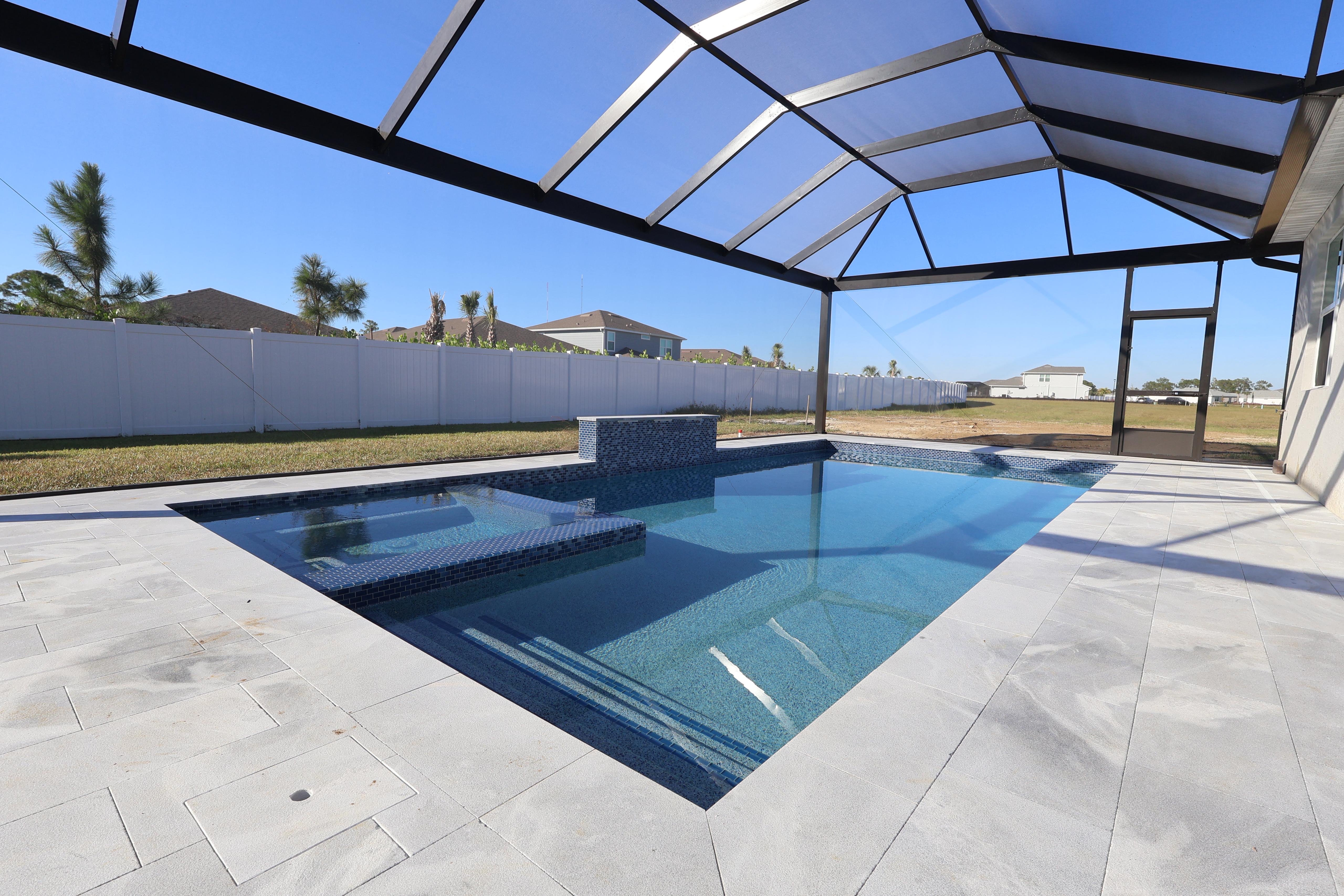
If you spend time around your pool in Florida, your screen enclosure is working hard every single day. Sun, salt air, summer storms, and daily wear take a toll on every panel — and sometimes the damage sneaks up on you before it becomes obvious. Catching the signs early saves money and keeps your outdoor space bug-free and beautiful year-round.
Here are five signs it's time to call a screening professional.
1. Visible Holes or Tears in the Screen
This one sounds obvious, but small holes are surprisingly easy to miss until they've had a chance to grow. A tiny tear from a branch, debris, or even a curious pet can widen fast — especially after a summer storm. Walk the perimeter of your cage and look closely at each panel. If you can see daylight through the screen or notice gaps along the spline channel, a rescreen is overdue.
2. Rust Stains or Corroded Frames
Florida's humidity and salt air are rough on aluminum. If you're seeing orange or brown streaks on your frame, or if the frame itself feels brittle or flaky when you touch it, corrosion has already started. Rust weakens the frame's structural integrity over time, and a corroded frame won't hold a new screen properly. It's far better to address a small rust spot now than to face a full structural replacement later.
3. Bugs Are Getting In
Your pool cage exists to keep Florida's wildlife outside — and if mosquitoes, no-see-ums, or palmetto bugs are making it inside, the barrier has failed. Even a pinhole-sized opening is an open invitation for insects. If you're swatting bugs while sitting by the pool, do a thorough close-up inspection of every panel, especially at corners and along the bottom spline.
4. Sagging or Bulging Screen Panels
Properly installed screens sit taut and flat. If a panel is sagging inward, bubbling outward, or pulling away from the frame, the spline has likely dried out or the screen material has stretched beyond its limit. Sagging panels also catch wind and debris more easily, which speeds up further damage. This is one of the more common issues we see on cages that are five or more years old.
5. It's Been More Than 10 Years
Even screens that look decent have a lifespan. In Florida, the combination of intense UV exposure, high humidity, and storm season means most screens begin to degrade after 7–10 years. The mesh weakens and becomes more prone to tears even without obvious physical damage. If yours haven't been replaced in a decade, it's worth a professional inspection — you may be closer to failure than you realize.
Ready for a fresh, tight screen enclosure? The Yasma Screen handles rescreening projects across Cape Coral, Fort Myers, Naples, and all of Southwest Florida. Get a free estimate today — we're happy to take a look.